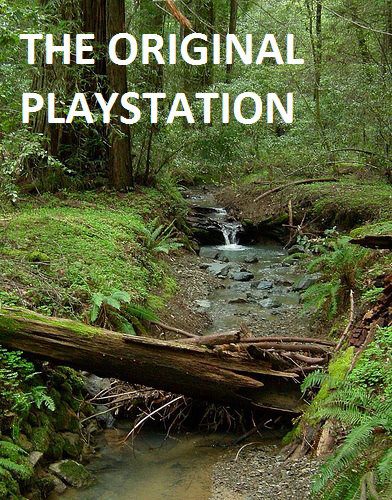
Being asked to share “essential play items for my younger
self” in this blog assignment, this is what I remember and consider THE most
important.—nature. It’s not that I
didn’t have toys growing up, however, as an adult looking back, I have far
fewer memories of those popular, plastic toys than I do the time spent outside both alone and with friends and the creative
energy I spent making toys from rocks, leaves, sticks and everyday household
items like a scrap of material, a hammer and nails, a clothes pin, or spool of
twine or string, which I then used to help transform objects in nature into instruments
of my imagination. I still remember the
pure joy and sense of wonder I found exploring, experiencing and playing in my own
backyard. We don’t need more ‘things’ to
teach our children; we need more time, space, and freedom to just let them be
in the world and allow their own brains to start to make sense of it through play. Too many children today are involved in too
many activities, trapped in cars running countless adult errands, or are
encouraged to sit inside using technology as a substitute for imagination. To these children, we owe countless apologies—as
they are being robbed of their ability to cultivate a sense of wonder, awe and
marvel that will serve their spirits and bring joy and happiness to their souls
for a lifetime.
Saturday, July 26, 2014
Saturday, July 12, 2014
Relationship Reflection
Ahhh..., summer. A time for many families to load up and take a long road trip to an exciting destination. After all that close family time in the car, I wonder how many are feeling like they'd rather throw themselves out of the window than actually get to Disneyland. Even the most positive family relationships can drive us crazy from time to time. Yet, they are often the most important factor in our lives. When adults are asked about the meaning of life, the majority will respond that at the end of the day, it's all about family. As an early childhood professional, I know that relationships play a major role in the healthy development of a child, and that at the end of our day in the classroom, it's also all about family.
In a preschool classroom, we spend a lot of time talking about our families in both formal and informal ways. "Your mommy is going to love that picture", or, "Is your daddy picking you up today?" But what do we really know about the families of our students? Often during story time or before nap, I will share personal stories about my family with the children. I choose from several botched summer vacation trips, my mother's mid-life crisis when she got a pet pig, my teenage sisters pushing me in the river while camping, or my father coaching me through my first dives off the high board. After reflection on all of these childhood memories, I begin to see just how much these relationships have shaped me into the person I am today, and how much I value them. Though vacation meltdowns seemed catastrophic in the moment, we were in it together; triumphant or not, we grew closer and created memories we still laugh about today. Although I was terribly embarrassed by my mother's pet pig, I now look back with such pride and a smile at her unique way of coping with a difficult time in her life. And although my teenage sisters pulled all kind of stunts to find alone time from their pesky little sister, they have become my mentors, best friends and greatest supporters. I also realize that my father was a great coach by simply showing up and being present to lovingly help me challenge and overcome my fears--a lesson I've carried throughout life though it all took place in one summer afternoon at the pool.
The point is that these everyday moments with family in childhood are what shape us into the people we are as adults. Children may not always have the words to express how they feel about their families or the cognitive ability to understand all of their family dynamics, but they are usually willing to tell you a story about them. As preschool teachers, we need to find time to inquire more into children's lives with their families by not only engaging the child, but creating opportunities for the parents to share family stories themselves. As active listeners, through these stories we are often able to identify strengths and weaknesses within these relationships that may need special attention or benefit from community resources. Often, by causally sharing comments a child makes during class with a parent, we are able to open a much deeper dialogue about the intricacies of their particular family dynamic, customs or values. Learning and engaging more with the parents and families of our students gives us a broader picture of the whole child, helps us create family partnerships, fosters respect and establishes a more cohesive learning experience between the home and school environment.
So whether your family is more National Lampoon or Brady Bunch, take advantage of the extra sunlight this summer and spend more time making memories with your kids. It's not just about the perfect vacation, the best toys or the coolest video games; it's about creating laughs, life-lessons, partnerships, and enduring relationships. It's about creating well-rounded, healthy, well-adjusted human beings out of your children. It's about family. I'll look forward to hearing all of the stories this fall!
PS: My mother would like to add... it was more than just her pet pig that made her unique! And I agree.
In a preschool classroom, we spend a lot of time talking about our families in both formal and informal ways. "Your mommy is going to love that picture", or, "Is your daddy picking you up today?" But what do we really know about the families of our students? Often during story time or before nap, I will share personal stories about my family with the children. I choose from several botched summer vacation trips, my mother's mid-life crisis when she got a pet pig, my teenage sisters pushing me in the river while camping, or my father coaching me through my first dives off the high board. After reflection on all of these childhood memories, I begin to see just how much these relationships have shaped me into the person I am today, and how much I value them. Though vacation meltdowns seemed catastrophic in the moment, we were in it together; triumphant or not, we grew closer and created memories we still laugh about today. Although I was terribly embarrassed by my mother's pet pig, I now look back with such pride and a smile at her unique way of coping with a difficult time in her life. And although my teenage sisters pulled all kind of stunts to find alone time from their pesky little sister, they have become my mentors, best friends and greatest supporters. I also realize that my father was a great coach by simply showing up and being present to lovingly help me challenge and overcome my fears--a lesson I've carried throughout life though it all took place in one summer afternoon at the pool.
The point is that these everyday moments with family in childhood are what shape us into the people we are as adults. Children may not always have the words to express how they feel about their families or the cognitive ability to understand all of their family dynamics, but they are usually willing to tell you a story about them. As preschool teachers, we need to find time to inquire more into children's lives with their families by not only engaging the child, but creating opportunities for the parents to share family stories themselves. As active listeners, through these stories we are often able to identify strengths and weaknesses within these relationships that may need special attention or benefit from community resources. Often, by causally sharing comments a child makes during class with a parent, we are able to open a much deeper dialogue about the intricacies of their particular family dynamic, customs or values. Learning and engaging more with the parents and families of our students gives us a broader picture of the whole child, helps us create family partnerships, fosters respect and establishes a more cohesive learning experience between the home and school environment.
So whether your family is more National Lampoon or Brady Bunch, take advantage of the extra sunlight this summer and spend more time making memories with your kids. It's not just about the perfect vacation, the best toys or the coolest video games; it's about creating laughs, life-lessons, partnerships, and enduring relationships. It's about creating well-rounded, healthy, well-adjusted human beings out of your children. It's about family. I'll look forward to hearing all of the stories this fall!
PS: My mother would like to add... it was more than just her pet pig that made her unique! And I agree.
Friday, June 27, 2014
All Dogs Have ADHD by Mary Hoopman
I have included the link in two different ways to ensure easy viewing...
https://www.youtube.com/watch?v=5HvHVyrnqbA
Saturday, June 14, 2014
Whole Child = Whole Society
We
are all born unique with differing gifts to present to the world, although we
may develop and present these gifts at differing points in our lives. It is a complex and challenging task for
educational systems to asses children’s abilities and create standards of
achievement by which to evaluate the individual’s performance. Standardized testing has long been the ‘go
to’ format for such assessment and evaluation.
While I do believe there is some benefit from this type of information
gathering, I also believe that it does not present the picture of the whole
child necessary to determine competence, creativity, intelligence or future
success in the world. For a more
comprehensive view, we must learn to consider the whole child and how all his/her
unique abilities may contribute to success and accomplishment.
“Leading
developmentalists are among those who believe that humans have multiple
intelligences, not just one. Howard
Gardner originally described seven intelligences: linguistic, logical-mathematical,
musical, spatial, bodily-kinesthetic (movement), interpersonal (social
understanding), and intrapersonal (self-understanding), each one associated
with a particular brain region (Gardner, 1983).
He subsequently added an eighth intelligence (naturalistic:
understanding nature, as in biology, zoology, or farming) and a ninth
(existential: thinking about life and death) (Gardner, 1999, 2006; Gardner &
Morgan, 2006) (Berger, 2012, p. 335-336).
Taking
Gardner’s research into account, educational systems that are willing to
consider the whole child by identifying strengths and weaknesses in the nine
areas of intelligence have a much better chance of instilling a positive
self-concept into their students, creating life-long internal motivations for
learning, fostering tolerance and acceptance, and have a greater chance of
higher achievement by their student populations both individually and
collectively. Many educational
philosophies such as Montessori, Waldorf, Constructivist and Reggio-Emilia either
directly or indirectly follow such types of assessments by education practices
that engage the whole child through their head, hands, and heart. In these educational settings, children are
provided with many different educational materials and experiences for them to
explore and conquer at their own pace.
Teachers in these settings are viewed more as guides following the
natural tendencies of the child to best foster their interest in a particular
subject when the child seems ready for that lesson. This process involves keen observational
skills to create insights into the child’s strengths and weaknesses and to
adjust the learning environment to best fit the specific needs and individual
learning styles of each child. There is
also a great deal of emphasis placed on the learning community to which every
student makes a contribution creating a community of learners of varying ages
and abilities which in turn brings a more social/emotional connection to the entire
school experience.
In
this type of atmosphere there is little pressure on students to achieve certain
benchmarks at a specific time, as is the case with standardized testing. Instead, it allows for each child to grow, develop, and learn at
their own pace. Teachers who no longer
fear losing their jobs over test scores have much more time and energy to
devote to each child and their family thereby creating a cohesive plan between
home and school to strengthen areas of concern.
By creating individualized plans, teachers are able to differentiate
their instruction to help concrete concepts through the child’s specific area
of intelligence. For example, a child
with musical intelligence as a strength can be more easily taught to read with
the use of music; children who are kinesthetic learners may best learn to read
when movement is incorporated into the lesson.
Schools that embrace the whole child have more leeway to be creative
with instruction, which in turn keeps all children more engaged. Ultimately this leads to higher rates of success
and overall satisfaction for students and teachers, alike.
However, not everyone in the world agrees with
this philosophy. In Japan, for example, “the teacher's main concern is to
cover the prescribed material thoroughly. Instruction in most subjects is
teacher-centered and takes place in a straightforward manner, usually through
lectures and use of the chalkboard. Students are frequently called on for
answers and recitation. They stand to respond” (U.S. Dept. of Education Study, (2000)).
While this isn’t far from the style of teaching used by many public
schools in the U.S., major differences are apparent. The biggest difference is their lack of
acknowledgment of special needs/varying abilities in students. The Japanese believe that,
“…all children have equal potential. Differences in student achievement are thought to result largely from the level of effort, perseverance, and self-discipline, not from differences in individual ability. Hence, students in elementary schools are not grouped according to ability. Promotion to the next grade is not based on academic achievement, but is automatic. Neither is classroom instruction individualized according to ability differences” (U.S. Dept. of Education Study, (2000)).
This philosophy make things extremely difficult for slow learners
who are thought to not be exerting enough effort into their studies, and who
are not assessed for learning disabilities or assigned remedial assistance. As they automatically advance each year, the
pressure to succeed becomes an increasing burden as they fall further behind. “Inevitably,
the number increases with grade level, accompanied by attendant disaffection
from school” (U.S. Dept. of
Education Study, (2000)). Having lived and taught in Japan myself, I
can attest to the burden these students face.
When a child fails a test in Japan, they not only feel that they have
let themselves down, but their teacher, classmates, school, family and country
as well. The pressure to succeed is
tremendous and can cause a significant strain on students’ self-esteem. “The
uniquely intense stress due to the Examination Hell (shiken jigoku) not only
generates a basic drive for Japan's economic success but also contributes to a
high rate of young people's suicide” (Iga, M (2011)). This fact breaks my heart! A child’s life
could be saved, simply by attending a different type of school—one that
embraces the whole child.
In my opinion, it’s time to stop
testing for intelligence and instead work from the assumption that all children
are intelligent in their own unique way.
It is our job as teachers, guides, parents and childhood professionals
to help them identify and foster their talents as well as strengthen their
weaknesses in order to create happy, well-adjusted, conscientious, creative and
tolerant children that grow into adults with these same characteristics. Isn’t the one who’s a whiz at math and able
to do our taxes for us as valuable and important as the one who understands the
basic principles of engineering and comes to fix our plumbing? The world needs all kinds of people, and when
we strive to educate the ‘whole’ child, we, in turn, educate and create a ‘whole’
society.
References:
Berger, K.S. (2012). The
developing person through childhood (6th Ed.). New
York, NY:Worth Publishers
|
Saturday, May 31, 2014
It's a mad, mad, mad, mad world--especially for children
One of the biggest threats to the
health of young children and the success of our society largely goes
undetected—mental illness. Mental
illness has a cumulative effect on our populations with many parents going untreated
for their mental illness and either passing it along to their children
genetically and/or environmentally. As
more violent crimes and school shooting are being carried out by children/teens
suffering from mental illness, we are just now beginning to pay closer attention. The statistics are staggering and provide a universal calling for a change in the way we look at and treat mental illness across the
globe. “Overall, 350 million people worldwide suffer from depression.
More than half aren't getting the help they need, and that the problem is
growing worse…The
World Health Organization (WHO) estimates that the five developed countries
with the highest rates of any kind of diagnosed mental health problems (including
substance abuse) are Colombia, France, the Ukraine, New Zealand and the United
States, according to a 2009 report” (Niller, 2012). Wow.
If 350 million people are suffering from depression or mental illness,
how many children are at risk of developing mental illnesses or disorders of
their own?
My ex-boyfriend suffered from
addictions, mental illness and Narcissistic Personality Disorder. Mental illness had wreaked havoc on his
family since he was a small child, and in adulthood, he was required by family
and society to take a look at his own. In
an effort to help him win his battle, we often had many discussions about his
childhood. His mother was wrongly
diagnosed schizophrenic when she was actually suffering from M.S. She was institutionalized when my ex was a
toddler severely disrupting their bonding and secure attachment. His father struggled to deal
with the circumstances of being a single parent with two young boys, and often
resorted to alcoholism and anger to mask his grief and sadness over the loss of
his living wife. As a result, my ex and
his brother were often left to fend for themselves begging for food and other
needs from close relatives and neighbors.
His brother seemed to model himself more after his father resorting to
violence and abuse to deal with his emotions; he went into the military. My ex took another approach and dissociated
from himself, which can be considered one of the beginning stages of Narcissistic
Personality Disorder (NPD). According to
WebMD:
“The exact cause of
narcissistic personality disorder is not known. However, many mental health
professionals believe it results from a combination of factors that may include
biological vulnerabilities, social interactions with early caregivers, and
psychological factors that involve temperament and the ability to manage
stresses. Some researchers believe that narcissistic personality disorder may
be more likely to develop when children experience parenting styles that are
excessively pampering, or when parents have a need for their children to be
talented or special in order to maintain their own self-esteem. On the other
end of the spectrum, narcissistic personality disorder might develop as the
result of neglect or abuse and trauma inflicted by parents or other authority
figures during childhood. The disorder usually is evident by adolescence or
early adulthood when personality traits have become consolidated.”
My ex used to say that the only
time he felt special was when the extended family gathered together and they
would ask him to sing and dance for them.
The result was that he became a highly successful musician with over 15
top 10 hits. However, he also had
created a life that mirrored his own childhood.
He suffered greatly from depression and addictions attending over a
dozen different rehab facilities and 5 psychiatric hospitals. He abandoned his own children and unconsciously
contributed to the same cycle of destruction for another generation. He could not sustain close relationships and
lacked self-esteem, empathy or a moral compass. Even with all his success, he
suffered greatly on a daily basis. Children don't have the capacity to understand the motivations of adult behavior and the result of the inevitable neglect or abuse resulting from a parent's mental illness often leaves the child with internalized (often hard-wired) feelings of shame, guilt, and loss of self-esteem that will effect the rest of their lives. I often wonder that if proper acknowledgment, understanding, and treatment were more accessible, how many lives would be saved from internal ruin.
As a result, I’ve been very
interested in what I could do as an early childcare professional to help
children avoid these outcomes in the future.
From our studies we know that the mental health of a parent can be a stressor that causes problems
for their children biosocially, cognitively, and psychosocially. Even those parents who are diagnosed with
lesser forms of depression leave that imprint on their children who often carry
those characteristics into adulthood without ever knowing why. To be able to intervene in a family’s welfare
in a meaningful way means that childcare professionals must use their
observation skills, listen intently, and establish trust with the parents in
order to encourage them to seek professional mental help in order to avoid
undesirable and unintended outcomes for their children. We must find ways to lift the taboos around
this subject and talk about it openly as it doesn’t just effect one child or
one family, but it’s effect both long and short-term leave a devastating mark
on the overall health of our society as a whole.
References:
Eric Niller, 2012
Saturday, May 17, 2014
Mama Makes the Best Milkshakes: Breastfeeding
Although I'm not a mother, breastfeeding has been on my mind lately due to a close friend who's struggling to get the hang of it. I've been trying to keep her spirits up by joking and laughing with her about my friend's mother's (from the last entry) advice on the subject. She says, "Breastfeeding is best when you can get another woman to do it!" Her children often tease her about passing them off to the other women in a hippie commune in the 70's. Many women enjoy breastfeeding, however many also struggle with the process. "Doctors worldwide recommend exclusive breastfeeding...Breast milk should remain in the diet for a year or more, according to the World Wide Health Organization" (Berger, (2012), 153). But what about the mother's who struggle? What are their options?
We know that breast milk is a magical concoction of balanced nutrition, including fats, nutrients, and micronutrients promoting optimal brain/body development, as well as antibodies to help fight infection and disease; but, did you know it can also help deter school drop-outs and teen pregnancy (Berger, (2012), p. 152)? Why would anyone not breastfeed when it creates so many benefits for the infant, the mother, and the family. There are several reasons, in fact. One particular reason is for pre-term deliveries; often at this stage of pregnancy, the mother's milk has not come in yet limiting her ability to nurse her infant. Luckily, solutions to this issue are taking cues from past when wet-nurses were commonly employed, or other eager lactating women in the community kindly shared their own breast milk. Today, doctors are even known to prescribe beast milk from local milk banks--a place where woman can safely donate and receive breast milk. If you are interested in learning more about this type of service, please visit www.milkbank.org , Mothers' Milk Bank located in Austin, Texas. I was very happy to see the services and opportunities they provide, and in the future, I will certainly recommend that new mothers talk with their physician and look into this wonderful option before they give up on breastfeeding altogether.
Another issue preventing breastfeeding, in my mind, would be that of an HIV-positive mother. However, it seems that breast milk is so powerful that "In some African nations, HIV-positive women are encouraged to breastfeed because their infants' risk of catching HIV from their mothers is lower than the risk of dying from infections, diarrhea, or malnutrition as a result of bottle feeding" (Cohen, 2007; Kuhn et al., 2009) (Berger, (2012), p. 152). In fact, according to Unicef, "In West and Central Africa, exclusive breastfeeding could save hundreds of thousands of the three million children under five who die annually"("Promoting and Protecting Breastfeeding", Unicef). The article goes on to say that while breastfeeding is a cultural tradition in the region, the problem is that only about "20 percent of infants under six months are exclusively breastfeed...rates remain among the lowest in the world" ("Promoting and Protecting Breastfeeding", Unicef). The solution seems to only be accessible through long-term, wide-spread promotion of health care practices and support groups within these communities; once again, education is "the key to this life-saving practice"("Promoting and Protecting Breastfeeding", Unicef).
References:
Berger, K. S. (2012). The developing person through childhood (6th ed.). New York, NY: Worth Publishers.
Mothers' Milk Bank, http://www.milkbank.org/milk-banking/milk-for-your-baby/
Unicef, "Promoting and Protecting Breastfeeding",
http://www.unicef.org/wcaro/english/4501_5055.html
We know that breast milk is a magical concoction of balanced nutrition, including fats, nutrients, and micronutrients promoting optimal brain/body development, as well as antibodies to help fight infection and disease; but, did you know it can also help deter school drop-outs and teen pregnancy (Berger, (2012), p. 152)? Why would anyone not breastfeed when it creates so many benefits for the infant, the mother, and the family. There are several reasons, in fact. One particular reason is for pre-term deliveries; often at this stage of pregnancy, the mother's milk has not come in yet limiting her ability to nurse her infant. Luckily, solutions to this issue are taking cues from past when wet-nurses were commonly employed, or other eager lactating women in the community kindly shared their own breast milk. Today, doctors are even known to prescribe beast milk from local milk banks--a place where woman can safely donate and receive breast milk. If you are interested in learning more about this type of service, please visit www.milkbank.org , Mothers' Milk Bank located in Austin, Texas. I was very happy to see the services and opportunities they provide, and in the future, I will certainly recommend that new mothers talk with their physician and look into this wonderful option before they give up on breastfeeding altogether.
Another issue preventing breastfeeding, in my mind, would be that of an HIV-positive mother. However, it seems that breast milk is so powerful that "In some African nations, HIV-positive women are encouraged to breastfeed because their infants' risk of catching HIV from their mothers is lower than the risk of dying from infections, diarrhea, or malnutrition as a result of bottle feeding" (Cohen, 2007; Kuhn et al., 2009) (Berger, (2012), p. 152). In fact, according to Unicef, "In West and Central Africa, exclusive breastfeeding could save hundreds of thousands of the three million children under five who die annually"("Promoting and Protecting Breastfeeding", Unicef). The article goes on to say that while breastfeeding is a cultural tradition in the region, the problem is that only about "20 percent of infants under six months are exclusively breastfeed...rates remain among the lowest in the world" ("Promoting and Protecting Breastfeeding", Unicef). The solution seems to only be accessible through long-term, wide-spread promotion of health care practices and support groups within these communities; once again, education is "the key to this life-saving practice"("Promoting and Protecting Breastfeeding", Unicef).
References:
Berger, K. S. (2012). The developing person through childhood (6th ed.). New York, NY: Worth Publishers.
Mothers' Milk Bank, http://www.milkbank.org/milk-banking/milk-for-your-baby/
Unicef, "Promoting and Protecting Breastfeeding",
http://www.unicef.org/wcaro/english/4501_5055.html
Saturday, May 10, 2014
To C-section or not to C-section...That is the question in Chile
I have never given nor witnessed a
birth although I have had many discussions with women who have. One of my favorite birthing stories comes
from a friend’s mother; she’s an American
woman who gave birth to five children while living in Chile in the 1970’s. Her birthing and child-rearing stories have
often been humorously discussed at family gatherings because of their
intensity. While living in a rural area
of Chile, she described going into labor pains and waking her husband in the
middle of the night. He was so shocked
by the news that he ran out of the house naked to get help from the
neighbor. By the time he returned, she
was holding their son in the sheets of the bed; she had managed to give birth
alone to a healthy baby boy with the aid of a small hand mirror—that’s right,
no drugs, no doctors, no nurses or midwives, just a hand mirror. During subsequent childbirths, she labored so
quickly that her older children were called to assist in the birthing process. As they tell the stories now as adults, it’s
often accompanied with grimacing facial expressions, but I’ve often wondered if
participating so closely in the birthing process had, in fact, bonded these
siblings in a very special way. I’ve
also wondered if this type of home-birthing practice was common in Chile both
then and today.
As I began to research birthing
practices in Chile, what I discovered was quite the opposite. An article published in The Lancet entitled, “Health sector reform and the rise of
caesarian births in Chile”, states “National
statistics suggest that Chile has outstripped Brazil in having the highest
reported caesarean section rate in the world” (Murray & Pradenas, (1997). Wow. How
and why did this happen? It seems the biggest contributing factors are the
restructuring of the heath care system financing by creating a private health
insurance system separate from the national health fund as well as the risks
doctors are facing with malpractice suits.
As more privatization of heath insurance occurred, as well as changes to
the national health fund, more C-sections are being performed as a result. Another hint toward this reasoning comes from
a “Chilean forum in English for Gringos, Expatriates, and Travelers to Exchange
Ideas and Information about Chile, South America” at AllChile.net,where one
woman describes the risks and consequences facing doctors in the country. Kel
writes that one, “should
also know that in Chile, when a doc has a bad outcome, he can be taken to
court. The result may not be just an award of money to the Plaintiff but the
judge can send the doc to Jail. As a result many private docs require patients
to sign away the right to sue for a bad outcome. Who can blame them for not
wanting to go to jail? Its also a powerful incentive to practice on the conservative
side.” C-sections are also easier
to schedule and complete leaving doctors with more time to include more
patients in their practice. This seems
to be a cautionary tale. As the article
points out, “Privatisation
and the opening up of choice in maternity care seem to have resulted in more
surgical intervention at birth. As many countries plan changes in their health
care financing, the experience of Chile should stand as a timely reminder that,
whether intended or not, shifts in funding have the potential for enormous
impact on health care practices and behaviours”
(Murray & Pradenas, (1997).
As modern women around the world continue to debate the pros
and cons between natural and surgically
assisted child births, I realize there are many choices to consider each one
weighted with family values, culture, and education. However I also wonder about the women who don’t
get a choice. Was my friend just lucky?
doi:10.1016/S0140-6736(05)62208-8
http://www.thelancet.com/journals/lancet/article/PIIS0140-6736(05)62208-8/fulltext
http://www.allchile.net/chileforum/topic1183.html
Subscribe to:
Posts (Atom)