As Early Childhood Professionals, we know the important work that psychologists, economists, and scientists are doing to prove the importance of play-centered, high-quality early childhood education and the benefits of early interventions practices for young children to help develop strong foundations and grow to become successful, contributing members of society. Those of us working with young children know the validity of their research, but are often at a loss for what we can do to contribute our voices to conversations that influence business leaders, government officials, policy-makers and politicians to understand the urgency of action and commit to an investment in the young children of our country.
This is where the National Head Start Association is stepping in and providing opportunities to lend support and make a difference. The Dollar Per Child program offers a way to get involved in the conversation and make a contribution. According to their website, "For just one dollar for every child in Head Start, we can ensure the voices of Head Start children and their families are heard by Members of Congress and the President". They have even put together a fundraising toolkit to assist community members in their local efforts to raise money and awareness for Head Start programs. As well, to further influence decision makers, they have put together a fact sheet by state, Head Start Works: The Facts, where statistics and information are recorded regarding childhood poverty, child homelessness, children with disabilities, families utilizing social services as well as economic impact. They also recognize businesses and organizations that do contribute by posting them on their current leader board located on the website.
By contributing to and sharing information about The National Head Start Associations advocacy campaign, we can all lend our support regardless of our affiliation to the early childhood field, and make a difference in the life of a child, the health and wealth of our communities, and a sound investment in the future for generations to come.
Reference:
The National Head Start Association
http://www.nhsa.org/advocacy/advocacy/dollar_per_child
Saturday, September 27, 2014

Saturday, September 20, 2014
Combating Poverty Through ECE
To my disappointment, I have not received a response from the Early Childhood Professionals in Mexico or El Salvador. So, I decided to research the state Early Childhood Education in Mexico through other sources. Childhood poverty has also been a topic for discussion this week and what I discovered is that both these topics are interrelated. In other words, Early Childhood Education has a direct impact on poverty, and poverty has a direct impact on Early Childhood Education. Therefore, we must work to understand and solve both issues to make true progress toward improving the lives of young children and increasing their contributions to society.
"When most of us think of a poor child, we tend to picture a rural child. We don't imagine as readily a girl living in the shadow of a city school that she will never attend, nor a baby growing up only a short walk from a health clinic he will never enter, nor a family deprived of services enjoyed by those living only streets away" (Nybo, Thomas, (2012). However, this is the case for many children who have been marginalized in rapid urban sprawls making them especially vulnerable to developmental delays, health problems, nutritional deficits, trauma and crime. According to the report, "More than 75 per cent of Mexico's people live in cities and towns, including 24 million children" (Nybo, Thomas, (2012). Indigenous children, children of migrant workers, and those living in slums are the most vulnerable.
Although Mexico is showing signs of economic growth, poverty and disproportion of services remains a critical issue. According to a press release issued by UNICEF (2013), "The human development indexes in some parts of Mexico are close to those of some of the world's least developed countries."
As Sheldon Shaeffer points out in his presentation at the 2014 World Forum Foundation, poverty is transmitted across generations, and, is therefore, a cyclical problem that must be addressed through parent/family education as well as Early Childhood Education. Critical to this issue is understanding and changing how young children are valued in developing countries. Through our study of Child Development, we know that early childhood represents a sensitive period of growth as well as a time of developing self-concept and core values; children look to their immediate environments and role-models to define who they will be in the world. According to a study done by The University of Michigan, "social values as well as cognitive development which often associate with success in societies are formed during this period."
I gained several insights from these resources. We must understand the challenges of poverty for urban as well as rural children; availability of services is not the same as access whether in Mexico or the United States. The Early Childhood Education field worldwide can and should be an avenue to begin to combat the cycle of poverty across generations. Through early education programs that also engage and educate parents, we can assist them in building strong self-concepts and personal values in their children that will help them grow to see themselves as contributing members of society.
References:
Thomas Nybo, UNICEF launches flagship report in Mexico City, warns that cities are failing children, UNICEF, (2013).
http://www.unicef.org/infobycountry/mexico_61864.html
Sheldon Shaeffer, Sheldon Shaeffer on Promoting Equity with ECE, World Forum Foundation, (2014).
http://www.worldforumfoundation.org/media-and-resources/wofo-tv/
University of Michigan, Early Childhood Education in Developing Countries
http://sitemaker.umich.edu/356.cho/conclusion__progresses_and_challenges
Press Release: Mexico: Government and UNICEF launch ground-breaking study addressing child poverty, UNICEF, (2013).
http://www.unicef.org/infobycountry/media_68584.html
Friday, September 12, 2014
Head Start--A great place to begin
The National Head Start Association is a non-partisan, not-for-profit organization dedicated to serving and assisting at-risk children and their families through access to Early Childhood Education and through the philosophy that "Every Child Can Succeed". Head Start's goal is to be a leader in the Early Childhood Field in support of the whole child, their family and community as well as to advocate for policy and institutional changes that support the most vulnerable of our population. Although most Early Childhood professionals are at least familiar with the Head Start Program, there are a couple of resources available on their website that address issues and trends around changing demographics in our nation that are worthy of mention for any Early Childhood professional regardless of their affiliation to the Head Start Program.
Under the Initiatives & Partnerships tab on their website, Head Start has developed two programs designed to engage community members. The first I would like to mention is called "Opening Doors", a free community volunteer toolkit available for download in English and Spanish. This program gives advice and templates about how to start and grow volunteer community programs in your area and strengthen community services and advocacy for young children and their families. The second program I found particularly useful for Early Childhood professionals seeking opportunities to engage with families of their Spanish-speaking ELL students is called "Abriendo Puertas--Opening Doors Network". This program offers a framework for Early Childhood Educators to engage the parents of our nation's Latino children by offering peer-to-peer training designed to increase their parental confidence, build effective parenting practices, and learn to advocate for their children. The curriculum in comprised of 10 session designed to address parental skills that support the healthy development and positive educational outcomes for their children.
Both programs prove to be very useful especially in addressing the current issues and trends in our nation's changing demographics. I would encourage anyone seeking to advance the lives of at-risk children in their community to reference the National Head Start Program website and take advantage of these quality resources and programs.
Reference:
National Head Start Association
http://www.nhsa.org/
Saturday, September 6, 2014
The Road to Understanding
In my current Master's course, Issues and Trends in Early Childhood Education, we have been given an opportunity to challenge our current thoughts and ideas about the education of young children outside of the U.S. by establishing contact with early childhood professionals in other countries. We are also put to the task of choosing and exploring the ways in which a specific early childhood organization supports early childhood communities and provides access to resources through their website. This will be an ongoing assignment, but I wanted to take a moment to explain my goals and thought process behind my choices.
Currently, in my home state of Texas, hundreds of children are crossing the border each day from Mexico and Central America. These children are refugees leaving their families and risking their lives to flee extreme violence and poverty within their own countries. While the issue is gaining much national media and political attention, little has been said about what we plan do to support these children in their integration into the American legal, medical and educational systems. In an effort to understand what I can do to support these children and contribute to positive outcomes for them and others who have immigrated to the U.S., I've chosen to contact early childhood professionals via email in both Mexico and El Salvador and intend to update my blog with our correspondence.
I have also chosen the National Head Start Association as the organizational website I wish to study as they will likely absorb many of these children into their program. With minority populations increasing nationwide, this organization must address the growing need for more professional development and community outreach to support the diverse cultural, linguistic and educational needs of the children they serve. It is my goal upon completion of this program to have gained the insight, understanding and education necessary to assist them in their efforts.
Thursday, August 7, 2014
My Supports
It's an important exercise of both gratitude and self-care to remind ourselves of our daily supports. Some people refer to it as a support system which invites us to think of the many aspects within our environment that contribute to helping us live our best lives. The following is a breakdown of the support I find in my own life and an invitation to reflect on the ones you find in yours.
Practical Support:
I rely on lists as a practical way to support my busy schedule and help me keep focused. Lists assist me in making the most of my time because they help me organize my thoughts and create a cohesive plan. However, without the practical use of my smart phone and computer, many of my goals/tasks from my lists would be much more difficult to achieve. I recognize and appreciate the ways in which technology contributes to daily support in my life.
Physical Support:
These days, I'm finding a lot of support through my daily routine of nutrition, exercise, sleep and vitamins. It's not always easy in this busy life to make the time to eat right, exercise, rest properly and take the supplements our bodies need. Recently, after a back injury, I am more committed than ever to recognizing and following through with the physical support my body and brain need everyday. I am also relying on a chiropractor, a masseuse, an acupuncturist, a holistic doctor and a physical therapist to support the changing physical needs of my body. In many ways I am viewing my body more as a vessel to carry my spirit where it wants to go. But, in order to accomplish my goals, I must tune the vehicle and continually put fuel in the tank. Without the physical support of my daily routine, my body would certainly be stuck on the side of the road instead of driving toward my dreams!
Emotional Support:
My sources for emotional support include my family, friends, pets, co-workers, and support groups. My family has always been my greatest source of emotional support in my life and contribute to my life in many practical ways as well. No matter what happens or what I'm feeling, I know there is always a family member who will love me and help me work through the challenge. However, because I live far away from them, I also recognize and appreciate the many ways in which my friends and co-workers support me in moments of need. Often finding a compassionate ear to listen is the best support we can hope for in realizing and living our best lives; for this reason, I also seek and receive support from therapists and support groups.
Spiritual Support:
Many people receive support from their spiritual practices and religious beliefs. I view my spiritual support in terms of meditation or prayer time, time sitting still in nature, and reading The Daily Word or another devotional. I do not practice a specific religion, but recognize and appreciate the need to connect with the universe and my spiritual faith if I want to keep on my spirit's highest path. In my mind, this type of support in my daily life leads to more inspiration, motivation, creativity and compassion.
Through the second part of this exercise, I recognize how important it is to be able to look ahead, identify a challenge and immediately begin working on envisioning a support system to help you accomplish your goal. A challenge that I imagine for myself in the future is doing more public speaking. In order to accomplish that step in my career, I will need some practical advise on voice control, body language awareness, and enunciation of my speech. I will also need the practical support of a microphone or headset to allow everyone in the room to hear me clearly. I will need the physical support of my daily routine and especially a good night's sleep the night before so that I'm alert and focused. Because public speaking makes me very nervous, I will want the emotional support of my family and friends calming my nerves and cheering me on. I may also want to seek advice from a mentor or another professional in the field for tips. Certainly, I will want the spiritual support of prayer to aid my confidence and keep me from passing out. Without all of these types of support working in conjunction in my daily life, I would find it hard to imagine that I would accomplish my goal. It is so important to realize that whatever it is we want to do in life, it is next to impossible without support.
Saturday, July 26, 2014
My Connections to Play
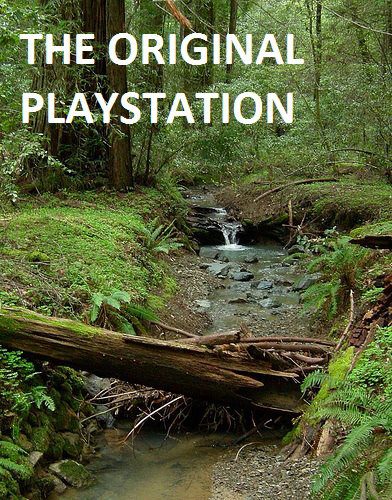
Being asked to share “essential play items for my younger
self” in this blog assignment, this is what I remember and consider THE most
important.—nature. It’s not that I
didn’t have toys growing up, however, as an adult looking back, I have far
fewer memories of those popular, plastic toys than I do the time spent outside both alone and with friends and the creative
energy I spent making toys from rocks, leaves, sticks and everyday household
items like a scrap of material, a hammer and nails, a clothes pin, or spool of
twine or string, which I then used to help transform objects in nature into instruments
of my imagination. I still remember the
pure joy and sense of wonder I found exploring, experiencing and playing in my own
backyard. We don’t need more ‘things’ to
teach our children; we need more time, space, and freedom to just let them be
in the world and allow their own brains to start to make sense of it through play. Too many children today are involved in too
many activities, trapped in cars running countless adult errands, or are
encouraged to sit inside using technology as a substitute for imagination. To these children, we owe countless apologies—as
they are being robbed of their ability to cultivate a sense of wonder, awe and
marvel that will serve their spirits and bring joy and happiness to their souls
for a lifetime.


Saturday, July 12, 2014
Relationship Reflection
Ahhh..., summer. A time for many families to load up and take a long road trip to an exciting destination. After all that close family time in the car, I wonder how many are feeling like they'd rather throw themselves out of the window than actually get to Disneyland. Even the most positive family relationships can drive us crazy from time to time. Yet, they are often the most important factor in our lives. When adults are asked about the meaning of life, the majority will respond that at the end of the day, it's all about family. As an early childhood professional, I know that relationships play a major role in the healthy development of a child, and that at the end of our day in the classroom, it's also all about family.
In a preschool classroom, we spend a lot of time talking about our families in both formal and informal ways. "Your mommy is going to love that picture", or, "Is your daddy picking you up today?" But what do we really know about the families of our students? Often during story time or before nap, I will share personal stories about my family with the children. I choose from several botched summer vacation trips, my mother's mid-life crisis when she got a pet pig, my teenage sisters pushing me in the river while camping, or my father coaching me through my first dives off the high board. After reflection on all of these childhood memories, I begin to see just how much these relationships have shaped me into the person I am today, and how much I value them. Though vacation meltdowns seemed catastrophic in the moment, we were in it together; triumphant or not, we grew closer and created memories we still laugh about today. Although I was terribly embarrassed by my mother's pet pig, I now look back with such pride and a smile at her unique way of coping with a difficult time in her life. And although my teenage sisters pulled all kind of stunts to find alone time from their pesky little sister, they have become my mentors, best friends and greatest supporters. I also realize that my father was a great coach by simply showing up and being present to lovingly help me challenge and overcome my fears--a lesson I've carried throughout life though it all took place in one summer afternoon at the pool.
The point is that these everyday moments with family in childhood are what shape us into the people we are as adults. Children may not always have the words to express how they feel about their families or the cognitive ability to understand all of their family dynamics, but they are usually willing to tell you a story about them. As preschool teachers, we need to find time to inquire more into children's lives with their families by not only engaging the child, but creating opportunities for the parents to share family stories themselves. As active listeners, through these stories we are often able to identify strengths and weaknesses within these relationships that may need special attention or benefit from community resources. Often, by causally sharing comments a child makes during class with a parent, we are able to open a much deeper dialogue about the intricacies of their particular family dynamic, customs or values. Learning and engaging more with the parents and families of our students gives us a broader picture of the whole child, helps us create family partnerships, fosters respect and establishes a more cohesive learning experience between the home and school environment.
So whether your family is more National Lampoon or Brady Bunch, take advantage of the extra sunlight this summer and spend more time making memories with your kids. It's not just about the perfect vacation, the best toys or the coolest video games; it's about creating laughs, life-lessons, partnerships, and enduring relationships. It's about creating well-rounded, healthy, well-adjusted human beings out of your children. It's about family. I'll look forward to hearing all of the stories this fall!
PS: My mother would like to add... it was more than just her pet pig that made her unique! And I agree.
Subscribe to:
Posts (Atom)